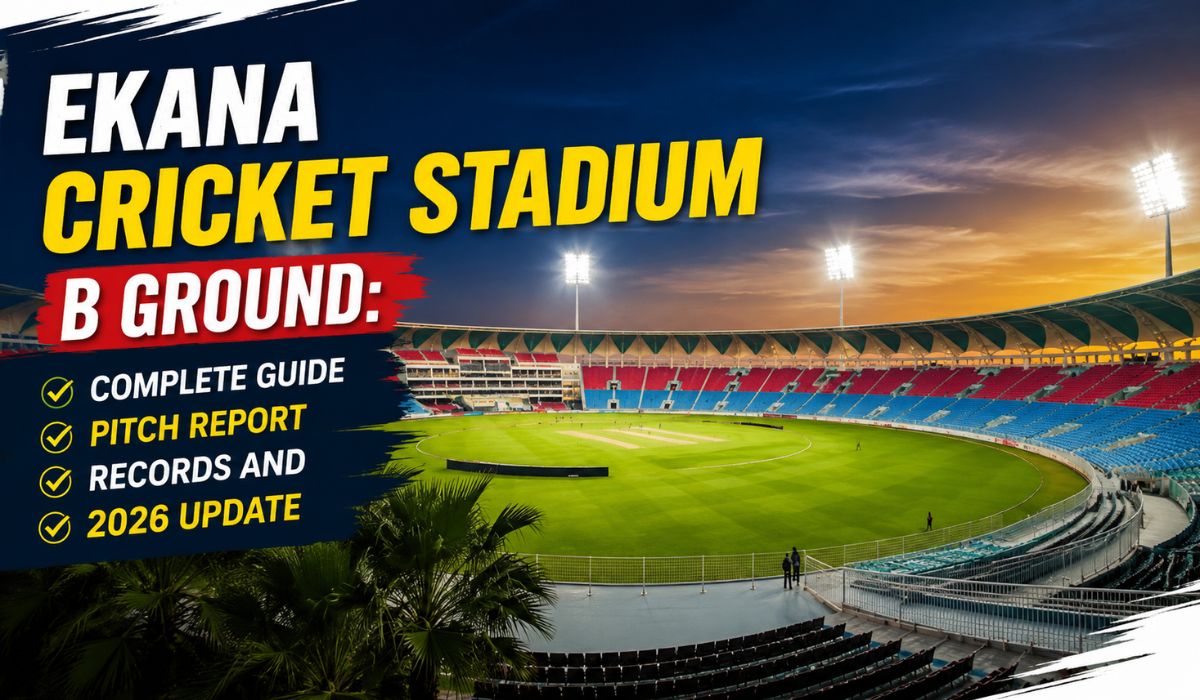

Wankhede Stadium has an element of electricity about it. You can see it the moment a batter steps out into the middle of this famous ground in Mumbai waves crashing, crowds roaring, a bouncy ball like nowhere else on earth -this is cricket history being written, rewritten and written again. Wankhede was the venue of some eerily emotional and dramatic moments that cricket has ever seen, from Sachin Tendulkar’s teary adieu to India lore returning in 2011 when they lifted the trophy. And with the advent of IPL, it still remains one of the coolest, highest-scoring and even horses-for-courses venues in the country.
Now, if you are wondering about what one can expect from a match at Wankhede Stadium in 2026 be it a fantasy cricket player preparing his XI or even a serious analyst reading the pitch report for his match preview or an avid cricket-crazy television-watching fan who just wants to enjoy their diluted cricket with better context then this is your one-stop guide. Here’s your guide to how the pitch behaves, the historical numbers, this year’s pre-match datasets on tossing trends, batting and bowling stats plus data for team performance (including home/away splits) during IPL times at this mecca of Mumbai masters.
The bat nearly always rules the roost at Wankhede Stadium but shrewd captains and astute bowlers have managed to make it a contest. Getting a handle on this pitch is half the battle.”
Quick Stats at a Glance
| Stat | Figure |
|---|---|
| Average 1st innings T20 score | 180+ runs |
| Matches won batting first (IPL %) | ~58% |
| Stadium capacity | ~33,000 |
| Highest IPL team score at venue | 235/1 |
| IPL titles won by MI at home | 5+ |
About Wankhede Stadium: A Brief Overview

Wankhede stadium is situated in southingh Mumbai beside the famous Marine Drive & its managed by the Mumbai cricket association (MCA). Constructed in 1974, it has a capacity of about 33,000 but IPL matches usually have downsized crowd control based on event logistics and administered quarters. Official home ground of Mumbai Indians, the Wankhede Stadium has witnessed Team India play many an international fixture (Test matches, ODIs & T20Is), spanning decades of memorable cricket.
The geography of the stadium is also what makes this place unique in IPL venues. The venue, situated right on the Arabian Sea, endures high humidity, the constant sea breeze blowing in from the west, and occasionally a moist overnight environment that impacts pitch preparation to supply the exceptional surface for batters. Square boundaries are comparatively short (usually about 60–62 meters square) while straight ones hover at the 68–72 meter mark. This dimension heavily favours aggressive down the ground stroke-play, whilst batter able to time the ball well will find pull and cut shots particularly rewarding due to the pace of the outfield. The outfield is one of the fastest in India, consistently giving 6–8 more runs per innings than slow venues.
Wankhede Stadium Pitch Report 2026: What Does the Surface Offer?
Wankhede pitches have been labeled as friendly to batsmen over the years but the surface has a changed considerably over few years, thanks to fine-tuning of preparation methods by various groundstaff. Curators at the MCA have prepared pitches that provide a bit of early movement and assistance to fast bowlers but are still very good for batting from the 6th over onward once the shine on the new ball wears off that is, in 2026. It is true and consistent bounce here, allowing batters to play their shots with real confidence without any concern of rises–uneven or otherwise–or deliveries shooting through low. T20 batting is a lottery type of affair that really could not be more pronounced than at older, more worn surfaces and these are indeed classic problems on those types of pitches. But not at Wankhede.
The surface itself is a red-clay mix, which binds well in those conditions and does not lose too much quality through the course of a T20 innings. The tendency for the surface to begin showing subtle wear marks outside the off-stump line has been well documented, providing spinners with some assistance in the middle overs of a T20 primarily between overs 10 and 16 when teams are most often looking to accumulate runs against, and conserve wickets from, quicks. Nevertheless, that genuine bounce does prevent spinners from total domination and a quality batter cleanly uses the pace of the ball to their advantage once footwork comes into play. Easily, if we had to sum up the Wankhede pitch in one-line for 2026 it is a batter’s dream with onerous areas of opportunity for disciplined and skillful bowlers who have clear come of action plan.
Pitch Characteristics at a Glance
Pitch: A red-clay mix that provides near perfect and even bounce all match; fast up-field skimming off an additional 5–8 runs per innings on average compared with the slower, grassier surfaces. Batsmen that get their forwards/cover drives through the line are handsomely recompensed, tall players who bat off the back foot always find this well from solid pitch bounce.
Pace assistance: The new ball provides genuine movement with the air, and fast bowlers can find real carry in the first 3–4 overs, particularly after overnight moisture has been in the pitch. Of course, if the pitch is dry and the ball is old it can become reverse swing in the last 4–5 overs, but this needs genuine skills and accuracy to make best use of it. You put quality pace bowlers in here, and teams use the powerplay so to try take full advantage of it really effectively.
Dew factor: Spinners perform best between overs 10 and 16 as the ball also grips a bit on the wearing surface. At Wankhede, leg-spin often works out much better than off-spin, as there tend to be a lot of rough patches around the middle-stump area where wrist-spinners can get genuine bounce and movement. Confident batters have often taken down classical finger-spinners who operate purely on turn without any significant change of pace at this venue.
Dew Factor: Dew is a massive and sometimes the tipping point in an evening IPL match. Second innings dew is enormous boon for teams batting second as the wet ball becomes extremely tough to grip for bowlers seam movement disappears, spin cannot be generated and very best bowlers can not execute their plans. This is probably the one aspect to do with the pitch at Wankhede Stadium that has mattered more than anything else in the modern IPL period.
Historical Records & Match Stats at Wankhede Stadium
Now wankhede stadium has a very colourful and celebrated history in all format of cricket, but in the realm of IPL and T20 cricket, the numbers are marvellous. This stadium has regularly been the venue for high-scoring matches that have kept fans on the edge of their seats until the final ball over many years. The data provided from the hundreds of T20 and IPL matches played here tell us only one thing aggressive batting gets rewarded, while bowling attacks with a poor variety, no discipline or have to execute your plans under pressure get punished.
| Stat Category | Detail |
|---|---|
| Average 1st innings IPL score | 178–185 runs |
| Average 2nd innings IPL score | 166–172 runs |
| Highest IPL team total | 235/1 (Mumbai Indians vs Rajasthan Royals) |
| Lowest IPL team total | 87 all out |
| Most runs (IPL, at venue) | Rohit Sharma – 1,400+ runs |
| Most wickets (IPL, at venue) | Lasith Malinga – 80+ wickets |
| Best bowling figures (IPL) | 5/5 – Alzarri Joseph (vs SRH, 2019) |
| Matches won batting first (IPL %) | ~55–58% |
| Matches won chasing (IPL %) | ~42–45% |
| 200+ scores in IPL history (venue) | 12+ occasions |
That said, the numbers clearly indicate that teams -based on Wankhede history- stand a higher chance of winning if they put runs on the board early in first innings. But successful chase scenarios are more common especially in the last few seasons, considering every IPL team has improved significantly as far as batting depth is concerned. As many as eight matches in 2024 and 2025 featured successful chases above the mark of 200 at this very ground a testament to the nature of the surface that is batting-friendly all through. That trend has continued into the 2026 season and already here we have seen some genuinely spectacular run chases on the record books.
IPL 2026 Trends at Wankhede Stadium
Anyone who wants to know about match dynamics at Wankhede Stadium must look closely as the 2026 IPL season throw up some very interesting patterns. Mumbai Indians, as their home fortress, have maintained a distinct and unwavering policy of batting first whenever they win the toss in afternoon conditions – not least because it is when the pitch has just come alive and dew hasn’t yet settled. But in evening matches – which comprise almost all of IPL fixtures the team that wins the toss has nearly always opted to chase first, simply because after sunset heavy dew begins settling on pitches and this softens it as well.
The logic is simple but huge: once the ball gets wet and slippery on dew-pecked pitch at Wankhede, it becomes almost impossible to defend any target. Even quality spinners cannot give a proper share of rotation on a wet surface, the same seam movement disappears and the bowlers lose their grip with the ball. In fact, the team that chases bats on a well-off, totally different pitch than one faced by the first batting team. Current statistics predict a significant advantage for the team batting second in IPL matches played so far in 2026 at Wankhede: In about approximately 3 out of every 5 games, they have been the eventual winners and no captain, analyst or fantasy cricket player can afford to ignore these metrics when being confronted with this venue.
2026 Toss & Match Result Trends
| Toss Decision | Matches Played | Win % | Avg Score |
|---|---|---|---|
| Bat First | 6 | 40% | 182 runs |
| Field First (Chase) | 6 | 60% | 179 runs chased |
Batting Analysis: Why Batters Love Wankhede
Without batting an eyelid, you ask any professional batter what their most treasured ground in India is, and a vast majority will name Wankhede Stadium. These reasons are not hard to comprehend. The pitch is solid and provides genuine bounce, the outfield is one of the quickest in the country, and short square boundaries make even mis-timed shots and thick edges have a fair to good chance of reaching the fence with help from speed. At Wankhede, the floodlights are so strategically placed and bright, that there is no sacrifice of visibility in any situation for batters under lights which makes a difference as compared to certain grounds where even limited lighting tends to cloud batting confidence and shot making approach.
Wankhede Stadium has always been a dreamland for openers who want to play aggressive cricket from the outset. It comes on to the bat beautifully, there is no misleading bounce, cut shot and pull are a dime a dozen as the pitch throws nothing to surprise either in terms of height. Conversely, this is a place where middle-order batters who back themselves against the pace can enjoy great success — as long as they’re confident enough to get underneath the ball when it bounces and hit it cleanly over the infield. That has already producing scintillating batting performances in 2026 batters scoring repeated strike rates above 200 in the powerplay, and even a match where two scores above 80 were posted by individuals to answer everything about how good the conditions can be here when all engines are firing.
Wankhede: Fantasy Cricket Batting Tips
For any Wankhede fixture, your openers are always the first must-pick, no matter how statistically sound this policy is, because they tend to be the biggest beneficiaries of the powerplay teams routinely score 55–70 in the first 6 overs here and an aggressive opener can often deliver 30–50 runs himself from just that phase alone to render them some of the highest-value fantasy picks at a venue. The middle overs are still so easy to hit, it seems ideal to build a fantasy team with either a big-hitting middle-order batter at No. 4 or 5 somewhere in your eleven, and a proven finisher (death-overs specialist) at this ground is an enormous asset. Pick at least 1-2 batters with 150+ career strike rate in T20 format (with most batsmen, a career strike rate of 150 at Wankhede Stadium is not a high bar to breach for the big-boys and especially during the death overs ie. overs 17 -20 – hence they become fair picks even if they are batting lower down)
Bowling Analysis: Can You Win With the Ball at Wankhede?
As much as the stats favour the batters, it is not all doom and gloom for bowlers at Wankhede Stadium. For any bowling attack aspiring to do even a half decent job out there, what with the balls swinging each way and staggering bounce variation being nothing but a marginal assumption, there has to be an unambiguous mix of variety, discipline, planning okay for smart minds and it goes without saying that utilising the conditions were ones unmatched through time. There is no disguise for pace and some of the fast bowlers who can bowl on a hard length and get the ball flying through the air became magnificent performers particularly during powerplay overs while the new ball is still moving, generally in those opening 10 overs whichsignificantlyh change affaires. Historically, Wankhede Stadium has been his pace-happy playground where teams such as Mumbai Indians thrived with such strategies and Jasprit Bumrah in particular has made this ground somewhat of a personal hunting field since he began at IPL (his career stat of 12.30 here).
Spinners whose success is based on using both pace and smart variation rather than classical turn tend to do much better here (even against batsman of schemer propensity) than those who depend solely on moving the ball sideways. A leg-spin bowler who has a big, well-disguised googly especially proves hard to read on this surface as the true bounce means batters never fully trust themselves with reading the spin off the pitch. A genuine and legitimate threat, even on a batter-friendly surface, as wrist-spinners who bowl at 85 – 90 kmph generate both turn and bounce the former gets more pronounced towards the second half of innings while the latter is relatively high without being wild in early middle overs. The best plan of bowling shown in the IPL season after season at Wankhede Stadium has been pace upfront in the powerplay to take wickets, clever spin through the middle to restrict run-rate and back to disciplined pace in death with yorkers pegging batters back and bouncers on-target to deny batters room for swing.
Bowling Insights: The powerplay is the one time frame in which pace bowlers pick up wickets at better probabilities teams taking 2–3 wickets in overs 1–6 are much more likely to end up defending their total or controlling the chase (this venue). Yorkers are the death’s most lethal weapon due to the stiff, hard pitch that makes fullish deliveries at the base of stumps extremely difficult even for the biggest hitters to send on its merry way. With the square boundaries short and the outfield fast, it is a virtual guarantee one way or another that bowling short and wide in death overs will result in either fours or sixes; getting his length right is literally non-negotiable for any bowler with hopes of being effective at Wankhede.
Team Performance at Wankhede Stadium (IPL Historical Data)
| Team | Matches Played | Won | Lost | Win % |
|---|---|---|---|---|
| Mumbai Indians | 90+ | 60+ | 30 | ~67% |
| Chennai Super Kings | 18 | 9 | 9 | 50% |
| Kolkata Knight Riders | 16 | 7 | 9 | 44% |
| Royal Challengers Bengaluru | 15 | 6 | 9 | 40% |
| Rajasthan Royals | 14 | 5 | 9 | 36% |
| Delhi Capitals | 13 | 5 | 8 | 38% |
| Sunrisers Hyderabad | 12 | 5 | 7 | 42% |
Mumbai Indians profess dominance in the win/loss ledger at Wankhede stadium, and that’s hardly surprising considering it is their backyard and they have had close to two decades of acquaintance with these conditions. Everything from their familiarity with the surface to the tremendous crowd support which induces a real home advantage and also includes pitch preparations that help concoct games more in their sweet spot represents this natural advantage for the visiting teams over time. Yet teams like CSK have proven this season that bring the right strategy and tactics around dew, toss decision, and the conditions really do make them very competitive here indeed, go along way to explain just why the Super Kings of all sides are able to boast a 50% win rate in a ground where traditionally home teams always fare well.
Pros & Cons of Playing at Wankhede Stadium
For Teams and Batters Pros:
Good stroke-play is rewarded and batters can time the ball with confidence there are not too many tell-tale surprises off this surface, and if they have form, a batter can express themselves from the first ball (16.05). A third factor is that the outfield is among the fastest in Indian cricket, so just imperfectly timed shots here – at even slightly imperfect angles – will still bring great value in terms of runs, something a slower Chinnaswamy or Sawai Mansingh Stadium_outfield would convert into singles/2s. A short square boundary gives pull shots, cut shots and horizontal-bat strokes copious runs for a strong back-foot game and the excellent floodlights render visibility under artificial lights one holding-back factor not in an innings. The dew factor is certainly a boon for the chasing team, and because of good conditions at night time, matches often become nail-biting as games go down to the wire beyond the point of no return during the second innings.
Cons – For Bowlers and Defending Teams:
The heavy dew in the second innings of evening games makes life extraordinarily and acutely difficult for bowlers every time grip is lost, seam and swing evaporate, and even some of the best bowlers cannot land their plans from around about over 12–13 when the ball is super wet. That’s a tough ask here, with the pitch holding its goodness for batting throughout 200 is no score to feel safe at Wankhede Stadium in front of an even mediocre batting line-up on a dewy one. If batters can pick the line early and trust it to bounce, spinners with no pace variation or subtle flight who are bowling on traditional turn will suffer heavily at their hands – even variables like the unpredictable sea breeze being able to create swing conditions that the way one attack is going at a given time may capitalise on much slicker than another.
Frequently Asked Questions (FAQs)
Q1. Normal score in Wankhede stadium (IPL 2026)
In the last couple of IPL season average first innings score for Wankhede Stadium has been approximately around 180–188 runs. A traditional H/T high-scoring venue, the 2026 season has definitely followed suit with several matches producing 200+ first innings scores. Teams batting second in successful chases are averaging about 170–178 runs, way too obvious for close, competitive games where both sides bat well and execute there plans.
Q2. Wankhede Stadium pitch report: Will it be a batters’ paradise or bowlers’ lay-up?
Overall this pitch is a batter friendly pitch also one batsman will need to settle on Wankhede Stadium. The real bounce, quick outfield and short square boundaries favour the batters heavily. But new-ball fast bowlers still receive substantive help in the powerplay and legspinners who are bowled with sufficient pace variation can have an impact at the midpoint of an innings. In general, the pitch offers two hitters especially in the second sixty minutes of T20 innings when we have an old ball towards the end and a dew covering at night matches.
Q3. IPL 2026 Wankhede Stadium – Batting First or Chasing?
Chasing, given the heavy dew in second innings, is strongly preferred at evening IPL matches. Wankhede: As a result, teams batting second enjoy a high win percentage of around 60% matches in the 2026 IPL season. Batting first is still a defendable option for the afternoon matches or conditions that receive little dew (which happens to be scarce) as putting up a really big target puts pressure on the side chasing. For a Wankhede fixture, whenever there is a decision between going with a strategy or fantasy XI, always check the pre-match weather and dew forecasts.
Q4. What is the highest run scored at the Wankhede Stadium in IPL?
Mumbai Indians hold the record for highest IPL team total at Wankhede Stadium (235/1). That score alone shows what a batting paradise this venue can be where conditions suit and the top order clicks from ball one. In IPL history, a number of other teams have scored 220-plus on this ground and with the run-scoring that we have seen over the years, DY Patil has become one of the highest scoring T20 venues in world cricket.
Q5. How Dew plays a role in matches at Wankhede Stadium?
The dew plays a huge role in Wankhede Stadium during the evening fixtures and often, it can be one of the deciding factors usually. Since Mumbai is a coastal city with very little distance from Arabian Sea, heavy dew starts settling at around 8:00–8:30 PM. This will make the ball wet and slippery for bowlers which will diminish their ability to generate swing, extract spin or maintain any meaningful grip. Dew is a massive factor for the chasing team the ball comes on to bat more nicely, bowlers lose all sort of grip and field placements will also be less effective. The varying temperature between day and night is a significant factor, one so crucial to toss decisions at Wankhede in the evening IPL games that captains who ignore it do so at their own peril.
Q6. Who are the most successful bowlers at Wankhede Stadium?
Lasith Malinga has been the most successful IPL bowler at Wankhed, with 81 wickets a major part fuelled by his unfathomable talent in yorker-style bowling that adds to impact equally in powerplay and death overs. Here, Jasprit Bumrah has also been brilliant at extracting uncomfortable angles on the true bounce with him usually unplayable in the danger overs. Among spinners, apart from Krunal Pandya it has been Harbhajan Singh who has been the most effective options over the years at Mumbai Indians home venue.
Conclusion
Wankhede Stadium is still one of the most dazzling, exhilarating and storied cricket grounds in the world, and it fully deserves every bit of its iconic reputation in 2026. For those in the stands or however you might be following it, it’s pure theater a ground where bat, ball and boundary appear almost to have a contract with each other, sixes are hit into the crowd almost on cue for an eager Mumbai audience that is never left short of any such maxims as to what that means (go! go!) What he left out of his answer, however, was the unsaid that can only felt and never truly explained in all its full-bodied magic: The electric rush of a night at Wankhede Stadium on game-day, when the ground is thrumming from heart to soul as they bowl the last over.
This makes Wankhede a neck-deep puzzle for analysts, fantasy cricket players and team strategists that requires painstaking reading of conditions, dew factors in real-time, toss decisions and team compositions before every contest. The Oval pitch in 2026 is as good for batters as it has ever been, but careful plans from an astute attacking-minded bowling side pace up front in the powerplay, clever spiced middle overs and accurate disciplined death bowling can turn it into a contest with outstanding returns even on hat-spirited days. The issue is that the toss still seemingly continues to play an enormous part in evening games now with a clear and quantifiable statistical advantage for the chasing side due to dew.
It doesn’t matter if you’re planning on watching from the iconic stands of this famous Mumbai venue, are piecing together your fantasy XI before a big IPL match, or simply following the action on your phone knowing what sort of wicket we’re looking at it gives you an enormously clearer and more educated lens through which to enjoy, debate and appreciate the game. A venue with this kind of history, this level of drama, so much real passion behind every single delivery bowled every ball at Wankhede Stadium retains the very real opportunity to become legend.

Dalvi is a passionate cricket writer, who loves covering the latest cricket updates, match insights, and player performances. With a strong interest in the game, Dalvi delivers accurate, engaging, and easy-to-understand content for cricket fans worldwide. As an author at CricWing, Dalvi focuses on providing timely news, match analysis, and trending cricket stories, helping readers stay connected with every moment of the game.